How to organize your wedding dress code and communicate it to your guests
A clear guide to choosing and communicating your wedding dress code. The main types, examples and how to word it in the invitation without causing confusion.
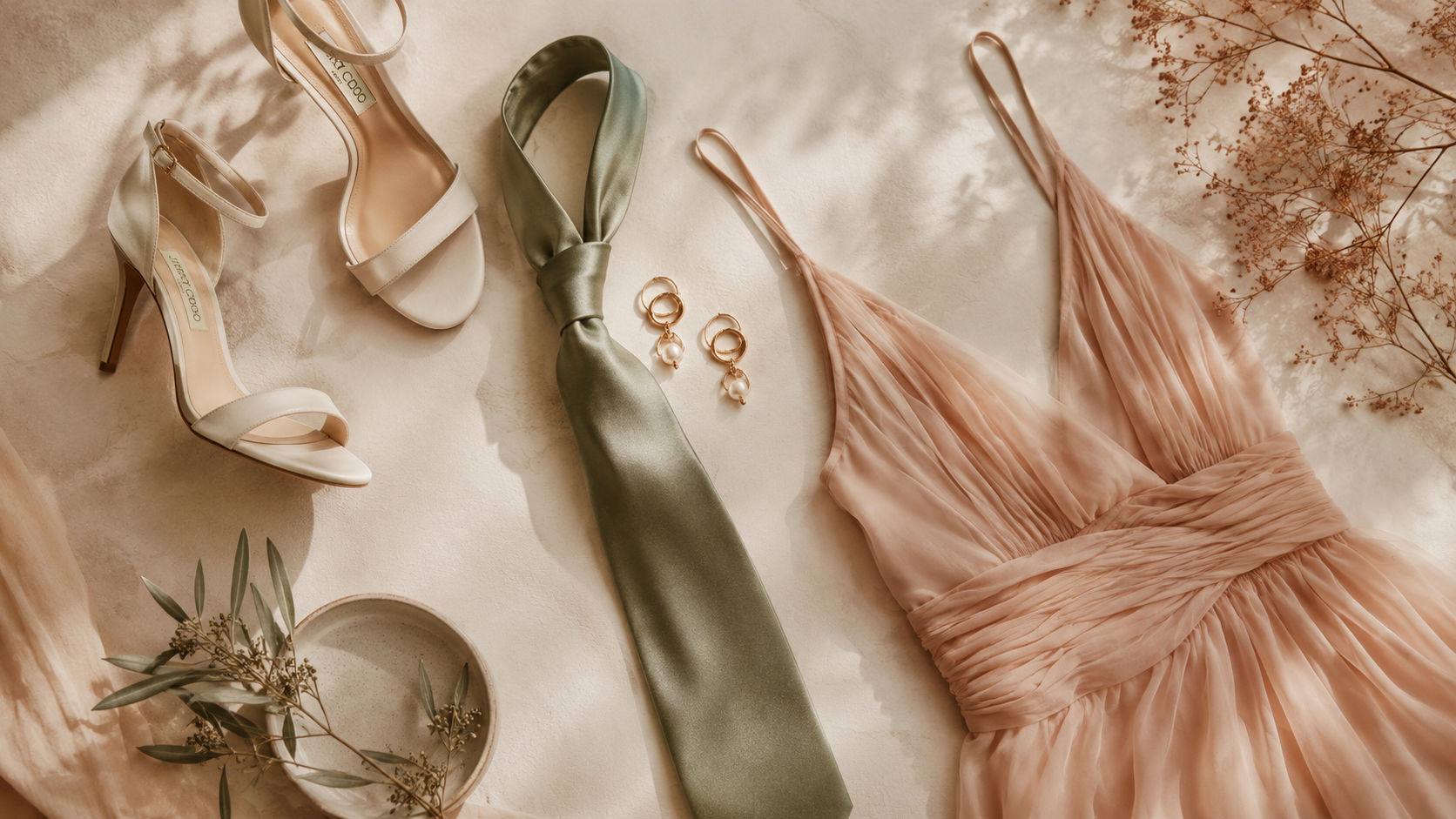
There's a question that comes up at almost every wedding, and almost no one wants to ask it out loud: "how should I dress?".
If the invitation isn't clear about the dress code, your guests are going to improvise. And when several people improvise in different directions, you end up with wedding photos where some are in jeans and others in tuxedos — something that, with one well-written paragraph in the invitation, is avoided entirely.
In this article we explain how to choose the right dress code for your wedding and, above all, how to word it in the invitation so everyone gets it on the first read.
🎯 Why does the dress code matter so much?
The dress code serves three functions that many couples underestimate:
- It gives your wedding visual coherence. The photos from the day look more harmonious when all the guests fall within the same register.
- It takes anxiety away from your guests. Knowing what to wear lets them enjoy themselves more, without the discomfort of feeling "out of place."
- It communicates the tone of the event. A 5 pm garden wedding isn't the same as a 9 pm gala reception — the dress code is the first signal your guests receive about what to expect.
It's a small detail with a huge impact. It's worth dedicating 10 minutes to it.
👔 The main types of dress code (from most to least formal)
There are a lot of terms floating around, but in practice your wedding will fall into one of these six. We explain them in order of formality.
1. Black tie
The most formal. Reserved for evening weddings at elegant venues, generally with a gala dinner.
- Women: a floor-length gown. Elegant jewelry.
- Men: a black or midnight-blue tuxedo with a bow tie. White shirt, formal black shoes.
2. Formal / Black tie optional
One step below black tie. Just as elegant, but with more flexibility.
- Women: a long dress or a long cocktail dress, in understated tones.
- Men: a dark suit (black, navy, charcoal gray) with a tie. A tuxedo isn't required.
3. Cocktail / Semiformal
The most common dress code for weddings in Latin America. It works perfectly for late-afternoon weddings, receptions and evening celebrations at classic venues.
- Women: a midi or cocktail dress. Heels.
- Men: a full suit, not necessarily dark. Tie or bow tie optional.
4. Smart casual
For daytime, garden or more relaxed weddings without losing style.
- Women: a midi dress or elegant pants with a blouse. Sandals or low heels.
- Men: dress pants, a formal shirt, blazer optional. No tie.
5. Beach
Specific to weddings on the coast, generally at sunset.
- Women: a flowy, light dress, ideally long or midi. Flat sandals (heels sink into the sand).
- Men: linen pants, a light long-sleeve shirt, no tie. Loafers or shoes without socks.
6. Themed
When your wedding has a specific theme (vintage, 1920s, garden, etc.), the dress code can ask for nods to the style without requiring a full costume.
💡 Nupcii Tip: If you chose a themed dress code, be specific about what you DO and DON'T want. A "vintage" theme can be interpreted a thousand ways if you don't clarify which era.
✍️ How to word it in the invitation
Here's the secret: it's not enough to just put the name of the dress code. Most of your guests know what "cocktail" is, but many aren't sure what "formal evening" or "smart casual" means in practice.
A wording that works very well has three parts:
- The name of the dress code (in bold or highlighted)
- An example line that clarifies what you mean
- An optional note about colors you'd prefer to avoid or prioritize
Examples of wordings that work
For a cocktail wedding:
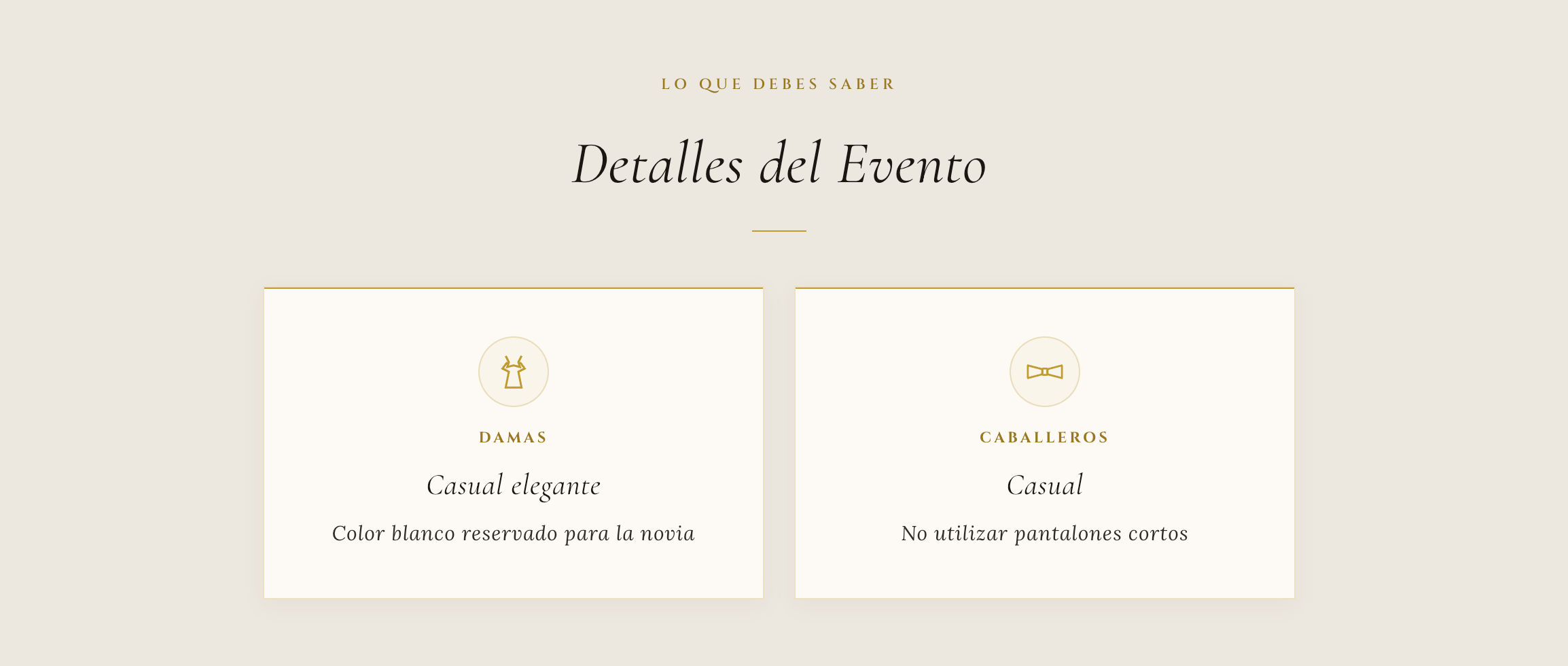
Dress code: Cocktail Women in a midi or elegant short dress. Men in a suit, tie optional. We ask that you avoid white — it's the bride's color.
For a smart casual wedding:
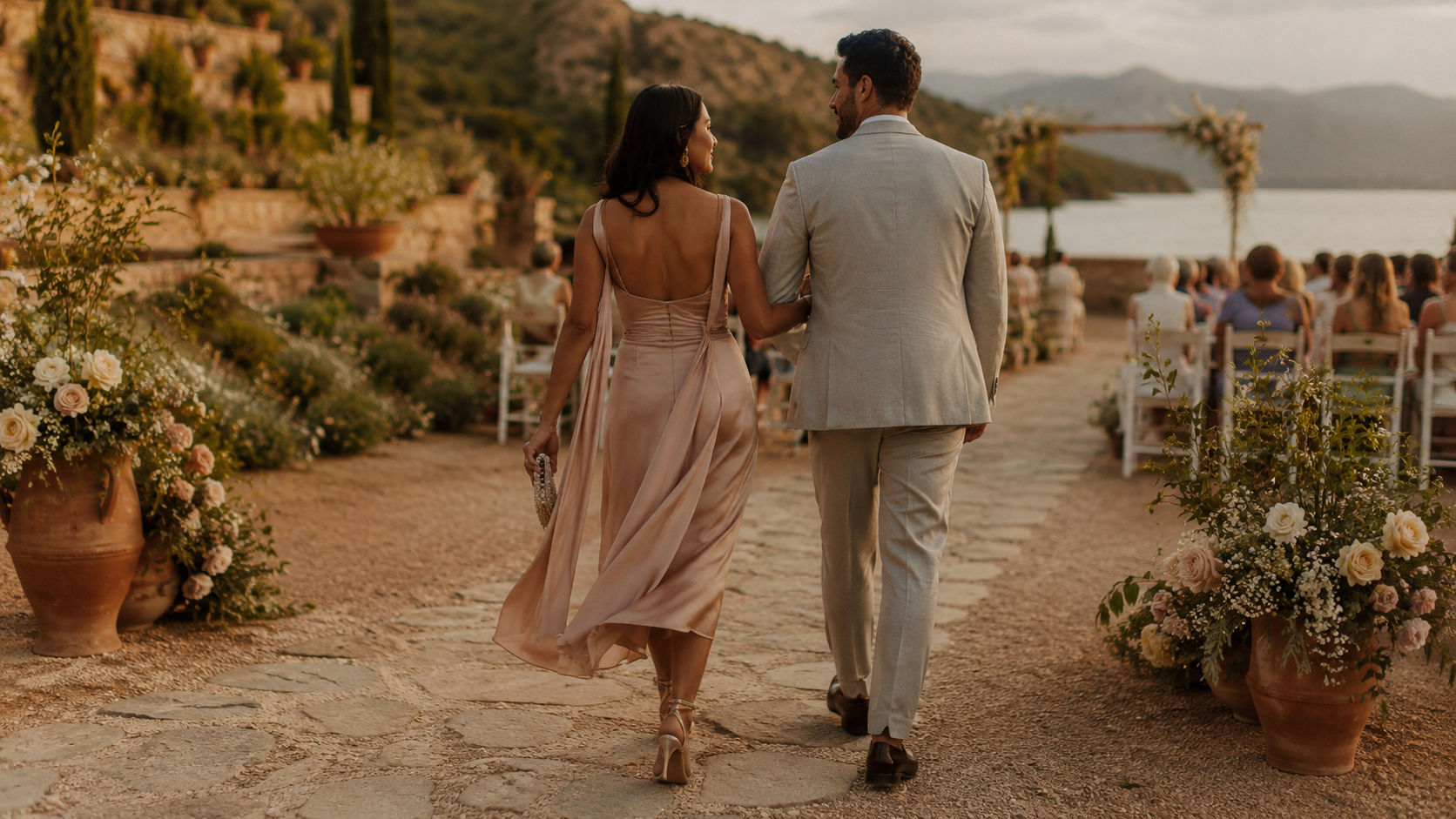
Dress code: Smart casual We're picturing an outdoor wedding in warm weather. Light dresses, shirts with or without a blazer. Comfortable but put-together.
For a formal evening wedding:
Dress code: Formal evening Long dresses for her, dark suits for him. We want to see you looking elegant. Avoid white and very light tones.
For a beach wedding:
Dress code: Beach elegant The ceremony is on the sand at sunset. Flowy dresses and flat sandals. Linen shirts and light pants. Forget the heels — they won't survive.
🚫 The "forbidden color" question
It's completely valid to ask that no one wear white — it's a socially understood norm across all of Latin America. But you can also ask people to avoid other colors if your wedding has a specific palette.
The rule is: mention it in a single line, without a scolding tone. Something like "we ask that you avoid white and cream tones" works better than a long list of prohibitions.
If your wedding has a main color (for example, sage green), you can also gently invite your guests to join that palette: "if you're up for it, we love earth tones and greens". It's optional — but anyone who wants to coordinate will know which way to go.
⚠️ Common mistakes when communicating the dress code
1. Assuming everyone knows the technical terms
"Black tie optional" sounds clear to someone who goes to formal weddings all the time. To an aunt attending her first elegant wedding in 10 years, it doesn't. Always add the example line.
2. Leaving it in doubt with vague phrases
"Dress nicely" or "whatever makes you comfortable" isn't a dress code — it's an invitation to chaos. If you don't define it, don't assume your guests will read between the lines.
3. Changing it at the last minute without notice
If you decide to modify the dress code after sending the invitations (it happens more than you'd think), communicate it clearly and in advance. If your invitation is digital, you can update the text and guests see the new version when they open the link.
4. Asking for very specific things that cost money
"All the women in pink" or "all the men in cobalt-blue ties" sounds lovely in theory — in practice it forces your guests to buy specific clothing for your event. Unless your circle takes it in stride, avoid it.
5. Not accounting for the climate of the venue
If your wedding is outdoors in the middle of coastal summer, asking for a tuxedo is asking your guests for several hours of suffering. Adapt the dress code to the real physical context of the event.
✨ Bonus: how to communicate the dress code visually
Beyond the text in the invitation, there are two additional channels that help reinforce the message:
- Your invitation's visual palette. If the colors and the template convey formal elegance, your guests read that signal without you saying a word. If the invitation is bright and summery, they read "relaxed."
- A reminder the day before. A short message over WhatsApp or a resend of the invitation 24 hours ahead works very well so no one shows up poorly dressed out of forgetfulness.
💡 Nupcii Tip: If you're going to send the dress code reminder 24 hours ahead, check out our wedding checklist — there you'll find all the key reminders for the final week, organized by moment.
📋 In short
For your wedding dress code to work well, remember three things:
- Choose the one that matches the real tone of your wedding — not the most impressive one, the most coherent one.
- Communicate it clearly — name + example line + (optional) color recommendation.
- Reinforce it visually and with a reminder close to the day — so no guest is left in doubt.
Ten minutes of care in wording this section save you five WhatsApp conversations with relatives asking "but what do I wear?".
✨ Conclusion
Every digital wedding invitation created with Nupcii includes a dedicated dress code section that appears within the natural flow of the invitation, right where your guests look for it. You can word it however you like, edit it whenever you need to and update it at any time — the changes are reflected instantly in the links you've already sent.
With the Free plan you can create your invitation completely free with up to 40 guests and include the dress code from day one. It's the perfect way to test how it looks before moving up to the Celebración plan ($19 USD, one-time payment) when you want to expand. If you don't have your invitation put together yet, we recommend following our step-by-step guide to creating it in less than 30 minutes.
✨ Because a good dress code doesn't impose — it guides, and that makes all the difference in how your wedding feels.
Ready to create your invitation?
Start free today. No credit card required.
Create my invitation for free