How to Plan a Small Wedding: A Guide for 30 to 50 Guests
How to plan a small wedding step by step: set the number, trim the guest list, pick a format, budget per guest and send an invitation with RSVP.
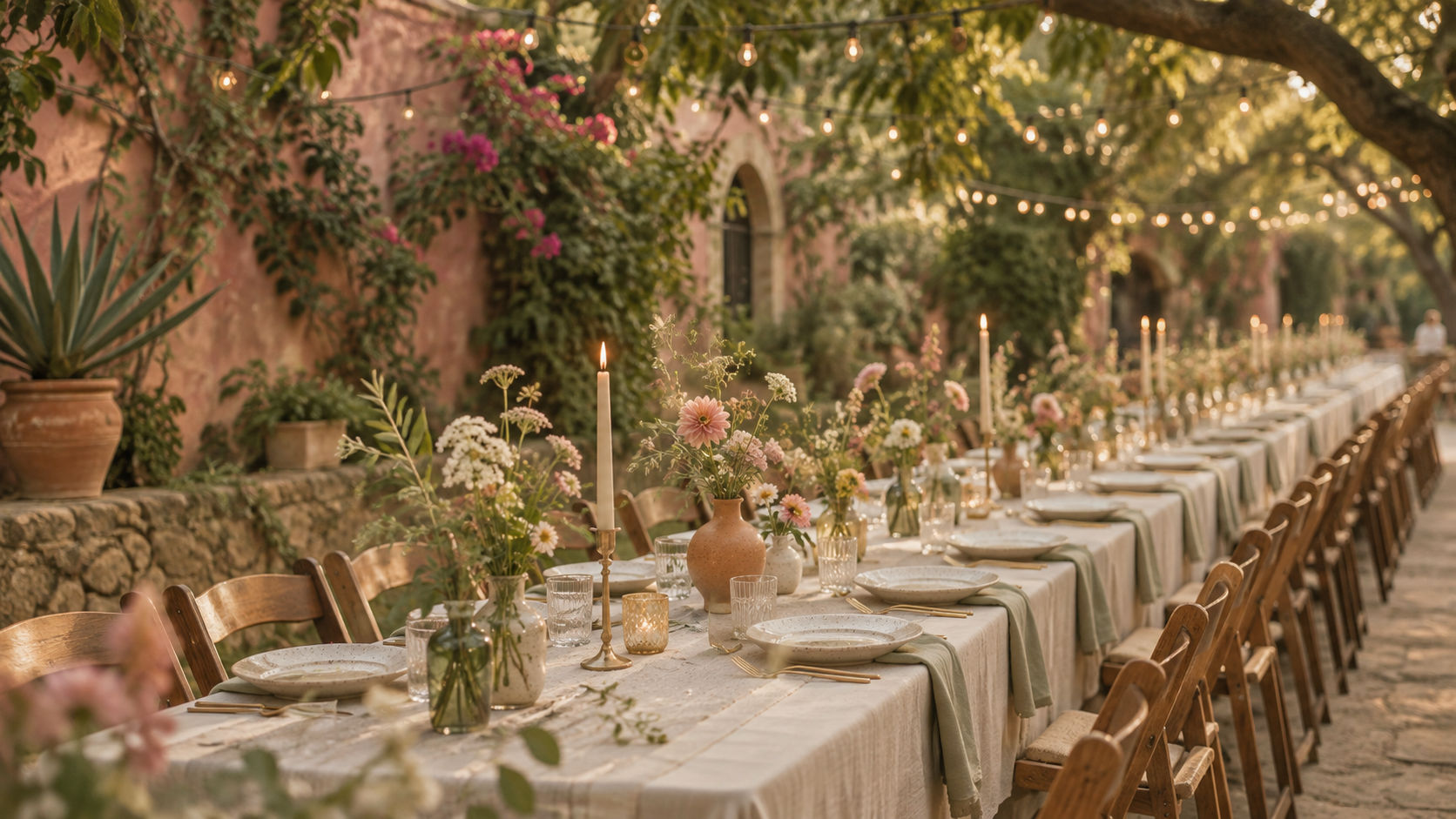
To plan a small wedding, set your number first (30 to 50 guests is the most common range), build the guest list around that cap, choose a format that feels full with few people (a lunch, a restaurant, a countryside house or a civil ceremony followed by dinner), work out your budget per guest and send an invitation that tells you exactly who is coming. That's the short version. The rest of this guide is the how behind each step.
An intimate wedding isn't a big wedding shrunk down. It changes the conversation with your families, the kind of venue that works and where your money is best spent. Plan it that way from day one and a 40-person wedding feels warm and complete, not like "the one we did because the budget ran out."
💍 What counts as a small wedding?
There's no official number, but in practice a small or intimate wedding has 20 to 50 guests. Below 20 it's usually a family ceremony or a civil wedding with dinner; above 60 you're into ballrooms, bigger setups and the logic of a mid-size wedding.
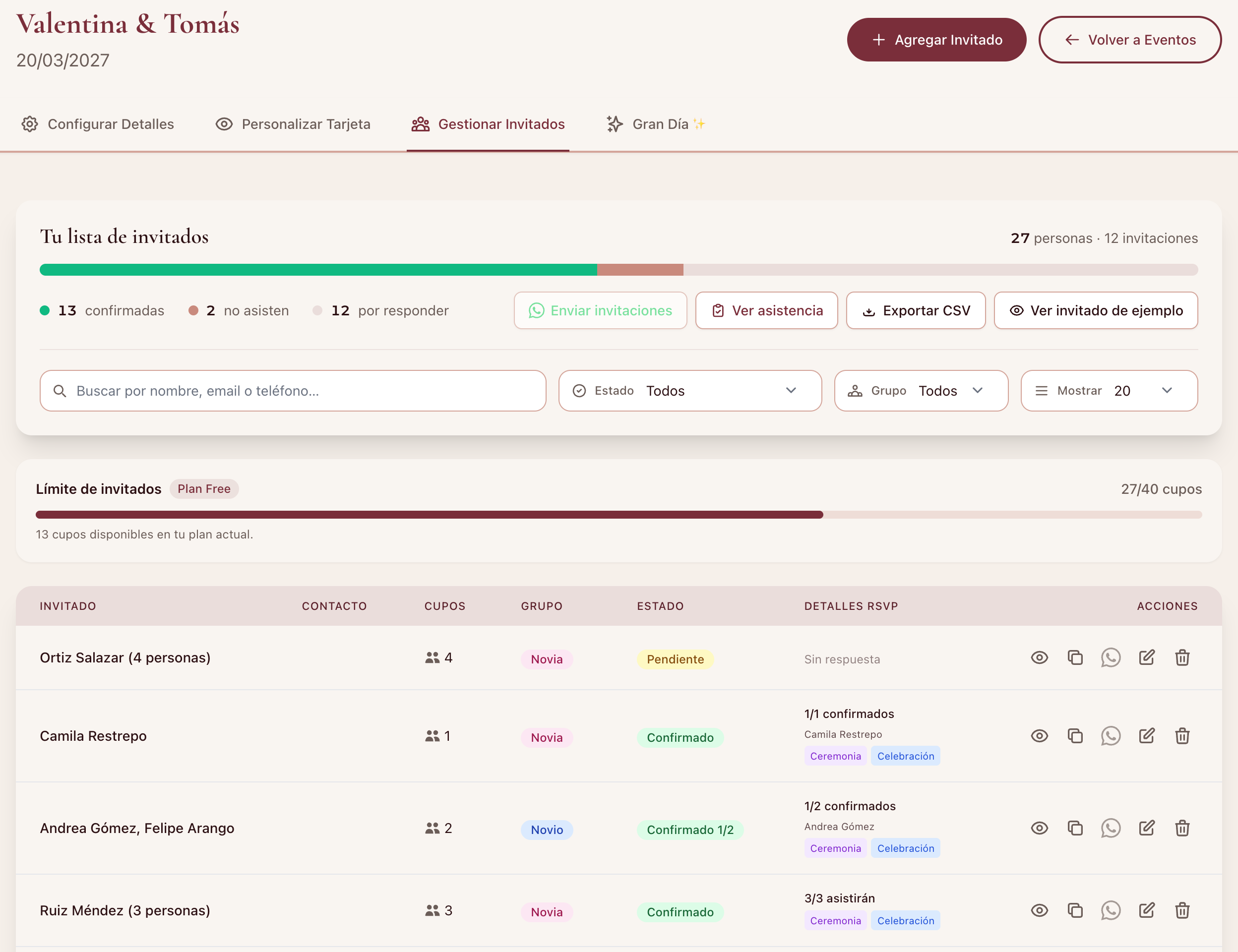
The most useful definition isn't a number but a question: could you have a real conversation with every guest during the celebration? If the answer is yes, it's a small wedding. That's exactly the point.
✨ The real advantages of an intimate wedding
- More budget per person. With the same money, every guest gets better food, better drinks and better details.
- More venue options. A restaurant's private room, a countryside house or a family garden can host 40 people, not 150.
- More date flexibility. For small groups it's easier to book a Friday, a Sunday or a weekday lunch, which usually cost less than a Saturday night.
- More time with your people. Nobody leaves without a hug from you, and the photos are full of faces you know.
- Less logistics. Fewer tables, less transportation and fewer RSVPs to chase.
The downside is real too: every seat matters. Saying no to someone is harder when the list is short, which is why the next step is the most important one.
✂️ How to trim the guest list without fighting
For a small wedding, the list isn't built by adding names until someone says "enough." It's built the other way around: the number first, then the names.
- Write the cap down. If the venue and the budget work for 40, the number is 40, not "40-ish."
- Split it before talking about people. For example, a share for each family and a share for the couple's friends. Talking about spots is easier than debating names one by one.
- Use one rule for everyone. Criteria like "only people we've seen in the past year" or "no plus-ones we haven't met" work well. A rule that applies to everyone gets argued less than an exception.
- Decide about kids. With 40 spots, five children are more than 10% of the list. If they're coming, count them from the start.
- Keep an honest B-list. If someone can't make it, you already know who to invite next.
If both families are large and that's where the pressure comes from, our guide to the wedding guest list when both families are huge covers how to split spots and how to talk to your parents without it turning into a fight.
💡 Nupcii Tip: if you want the ceremony to be even more intimate than the party, you don't need two separate lists. When you add each guest in Nupcii, you choose which moments they're invited to (ceremony, celebration or both), and each person only sees what applies to them on their invitation.
📸 
🍽️ Formats that work for 30 to 50 guests
The key to a small wedding is choosing a format that looks full with few people. A ballroom for 200 with 40 guests feels empty; one long table for 40 feels like a party.
1. A daytime lunch
A late-morning ceremony followed by a long lunch that drifts into the afternoon. You get natural light (great for photos), it usually costs less than a dinner, and it's easier on grandparents and on anyone traveling that day.
2. A restaurant with a private room
For 30 to 50 people this is one of the best value options: you mostly pay for the menu per person, not for renting a hall you don't need. Ask about minimum spend, how late you can stay and whether you can play your own music.
3. A countryside house or farm
A long table under the trees or a small tent in the garden. It gives you more freedom with timing and decor, but you'll have to sort out food, chairs, restrooms, transportation and a rain plan.
4. Civil ceremony and dinner
Sign the papers at the registry office with your closest people, then host a dinner for the whole group. It's the simplest format to organize and the one with the fewest setup decisions.
5. At a family home
If someone in the family has a large patio or garden, it may be the most meaningful venue of all. Hire catering and furniture separately and agree early on who handles cleanup at the end.
💰 Budget per guest: how to work it out
There's no single price for a small wedding: it depends on the city, the season, the format and what each vendor includes. What you can do is calculate your own per-guest ceiling in three steps:
- Set the total you two can spend (plus anything your families are contributing).
- Split it with the 50/30/20 formula: 50% for the big things (venue, food, photo and video), 30% for the experience (outfits, decor, music, cake) and 20% for details and surprises. It's explained in depth in our guide to the wedding budget with the 50/30/20 formula.
- Divide the food and drink share by your number of guests. The result is the most you can pay per plate. With that number in hand, quotes filter themselves.
Keep in mind that not everything goes down when the list does. Food, drinks, chairs and transportation grow with every guest; photography, outfits and music cost almost the same for 40 as for 120. That's why the cost per person at a small wedding can go up even as the total goes down, and that's not a bad sign: it's money that used to go into volume and now goes into quality.
💡 Nupcii Tip: whenever you ask for a quote, ask for the price per person and the minimum number of guests. Many venues charge a minimum, and with 35 guests you could end up paying for 50 plates if you don't ask first.
📸 
📲 Invitations and RSVPs when the list is short
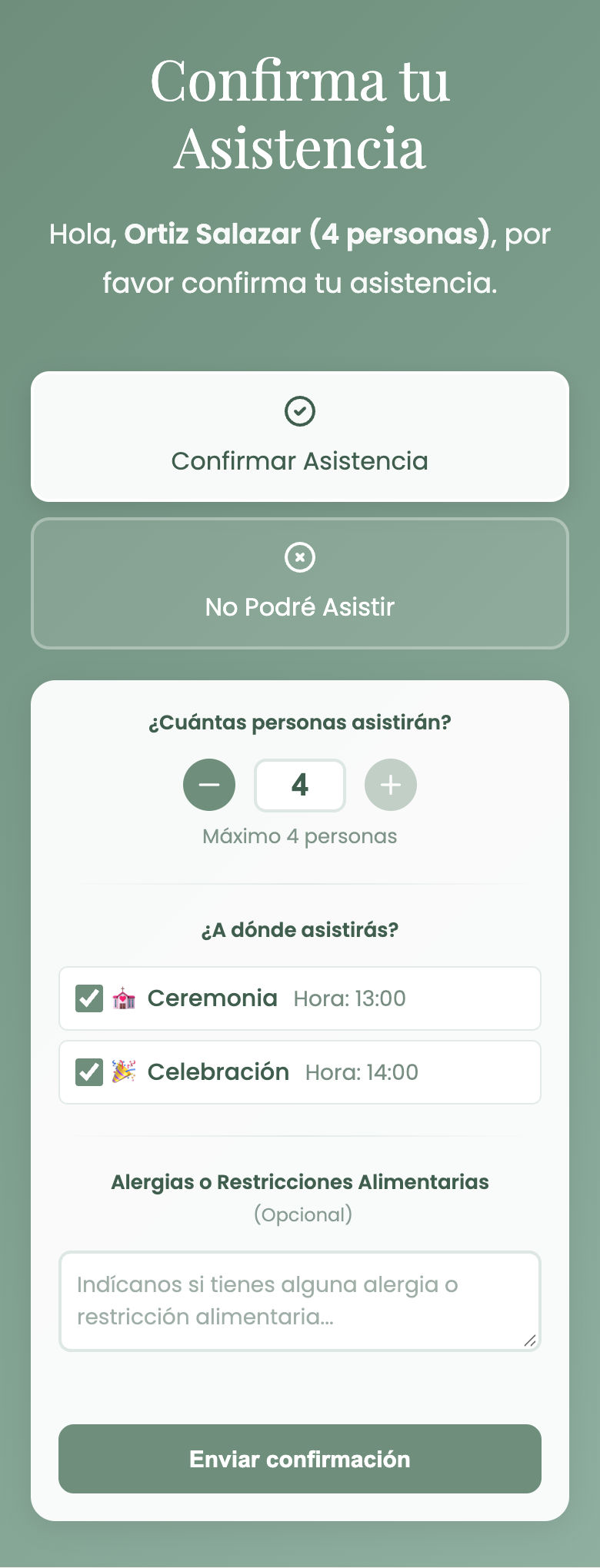
With 40 guests every RSVP counts: the restaurant charges per person, the table is set with names and an empty chair shows. That's why a small wedding needs an invitation that doesn't just inform, but tells you who is coming, how many they are and whether anyone has a dietary restriction.
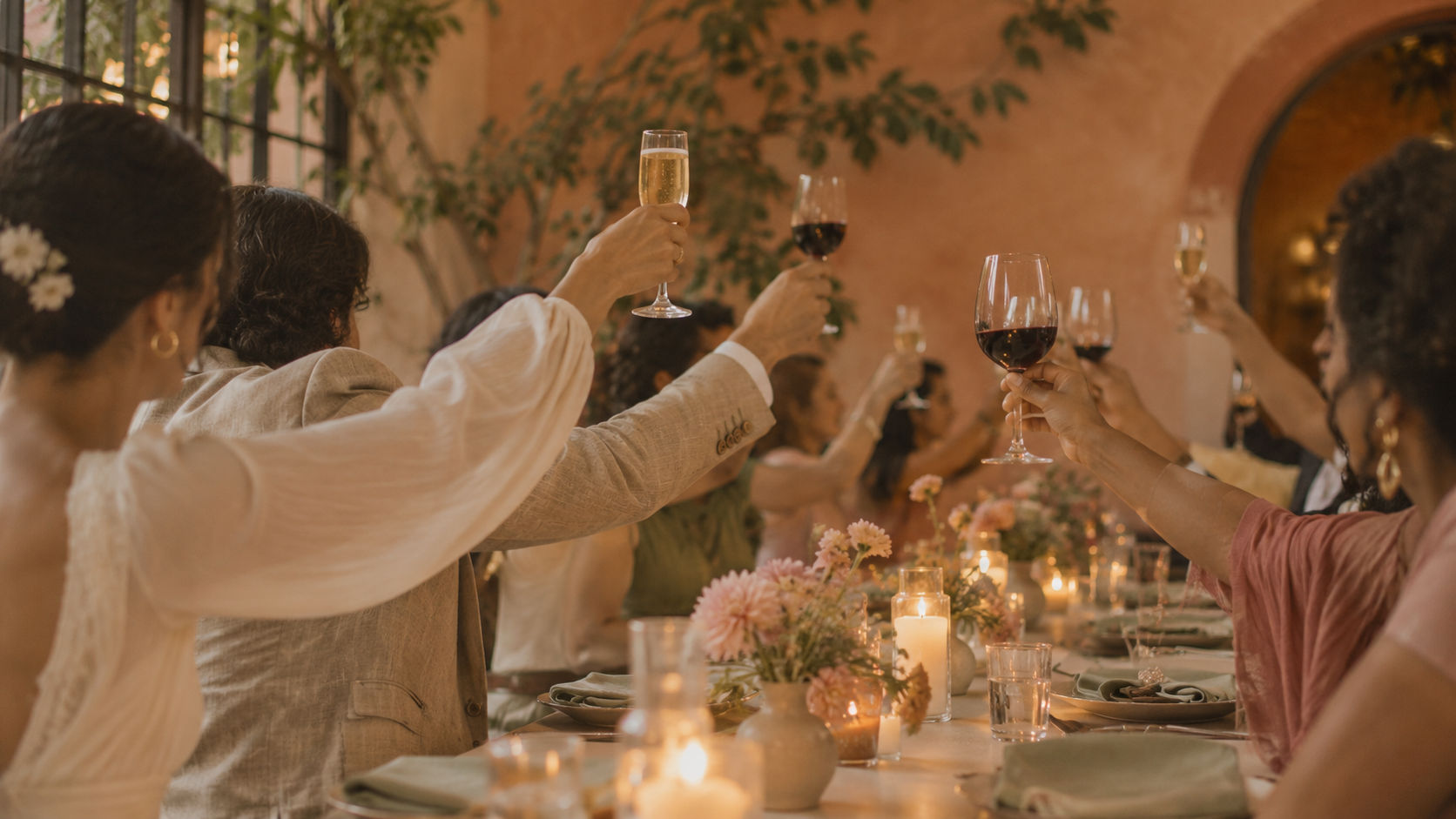
A digital wedding invitation handles all of that at once. In Nupcii each guest gets their own link with their name and the spots you reserved for them (a family sees "4 people," for example), and they RSVP from their phone in a minute. You see the replies in your dashboard as they arrive: confirmed, not attending and awaiting reply, counted by person.
And here's the best part for a small wedding: the Free plan covers up to 40 guests, no credit card needed. It includes the three free templates (Garden Romance, Romantic Blush and Classic Elegance), RSVP and the countdown. Your dashboard shows how many of the 40 spots you've used and counts them by person, so a family of four takes up four.
If your list ends up at 45 or 50, the Celebration plan costs $19 USD as a one-time payment, with no subscription, and removes the guest limit. It also adds the premium templates and sending through WhatsApp from your dashboard.
📸 
If you want to see how all of that works behind the scenes, our guide on how to organize a wedding guest list walks you through the summary, the attendance view and how to export the list for your caterer.
💡 Nupcii Tip: before you send it, test your invitation with the "View example guest" button in your dashboard. You'll see exactly what your guests will see, without creating a test guest.
📍 Planning a small wedding in Colombia?
If you're getting married in Colombia, we have city guides with real venues, reference price ranges and capacity. Many include restaurants, houses and farms that work beautifully for 30 to 50 people:
- Affordable wedding venues in Bogotá, with historic houses in the city and options in the savanna.
- Affordable wedding venues in Medellín.
- Affordable wedding venues in Cali.
- Affordable wedding venues in Barranquilla, including restaurants with private rooms for intimate weddings.
- Affordable wedding venues in Cartagena.
- Affordable wedding venues in Bucaramanga.
- Wedding venues in Santa Marta.
Whenever you visit a venue, ask for the smallest space they have. Many places that seem built for 200 people have a terrace, a second room or a garden for groups of 40.
📋 In short
| Step | What to do |
|---|---|
| 1. The number | Set the cap (30 to 50 guests) before writing any names |
| 2. The list | Split spots by family, use one rule for everyone and keep a B-list |
| 3. The format | Lunch, restaurant, countryside house, civil ceremony with dinner or a family home |
| 4. The budget | 50/30/20 formula and a per-guest ceiling based on the food share |
| 5. The invitation | One link per guest with RSVP; the Free plan covers up to 40 |
✨ Conclusion
A small wedding isn't a cut-down version of another wedding: it's a choice. Fewer guests means more time with each of them, more budget per person and more freedom to pick a place that truly feels like you. All it asks for is order from the start: the number first, the names second and a clear way to know who's coming.
For that last part, create your free invitation for up to 40 guests on Nupcii. You can start with the Garden Romance template, add your guests with their spots and watch the RSVPs land in your dashboard.
✨ Because at a small wedding every chair has a name, and that's what makes it big.
Ready to create your invitation?
Start free today. No credit card required.
Create my invitation for free